GORRET NYANGOMA:
FROM ENGINEERING
STUDENT TO
ENTREPRENEUR
How an eLearning course
sparked a student-run PPE
venture in Eastern Uganda.
“The online course in entrepreneurship
and business skills proved
transformative.”
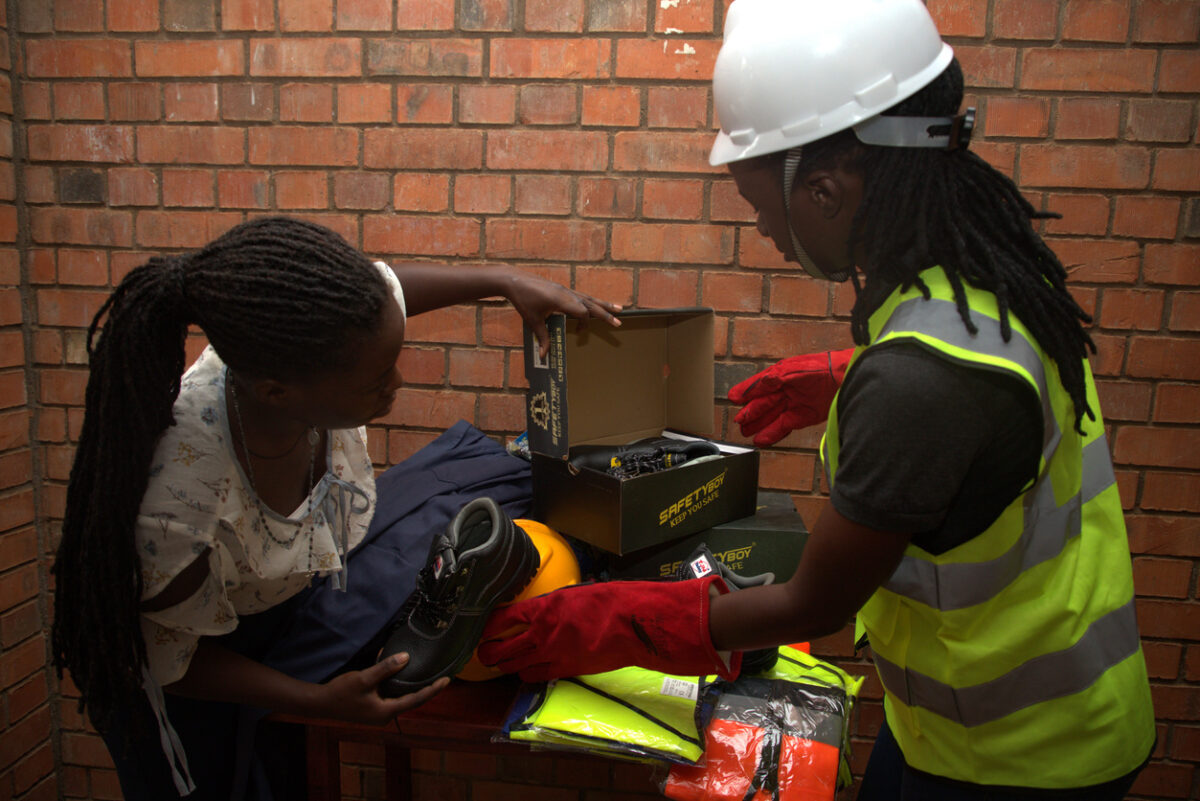
Gorret Nyangoma, a fourth-year electrical engineering student at Busitema University Main Campus, initially held a conventional view of post-graduation life. “Before engaging with the eLearning Initiative’s interventions, I had another perspective about life at school and at work,” she reflects. “I thought it was a must to get a job after school, and I thought it was a must for graduates to get white-collar jobs.”
However, the eLearning Initiative challenged these preconceived notions. Gorret gained valuable insights into skills mismatch, workplace rights, and the often-frightening world of entrepreneurship. “I learnt a lot about skills mismatch, you have skills in a particular field, but you are applying them in other fields. I learnt that workers have rights in the workplace. Additionally, I was afraid of how to enter the entrepreneurship world, advertising my business was one of my major weaknesses and problematic.”
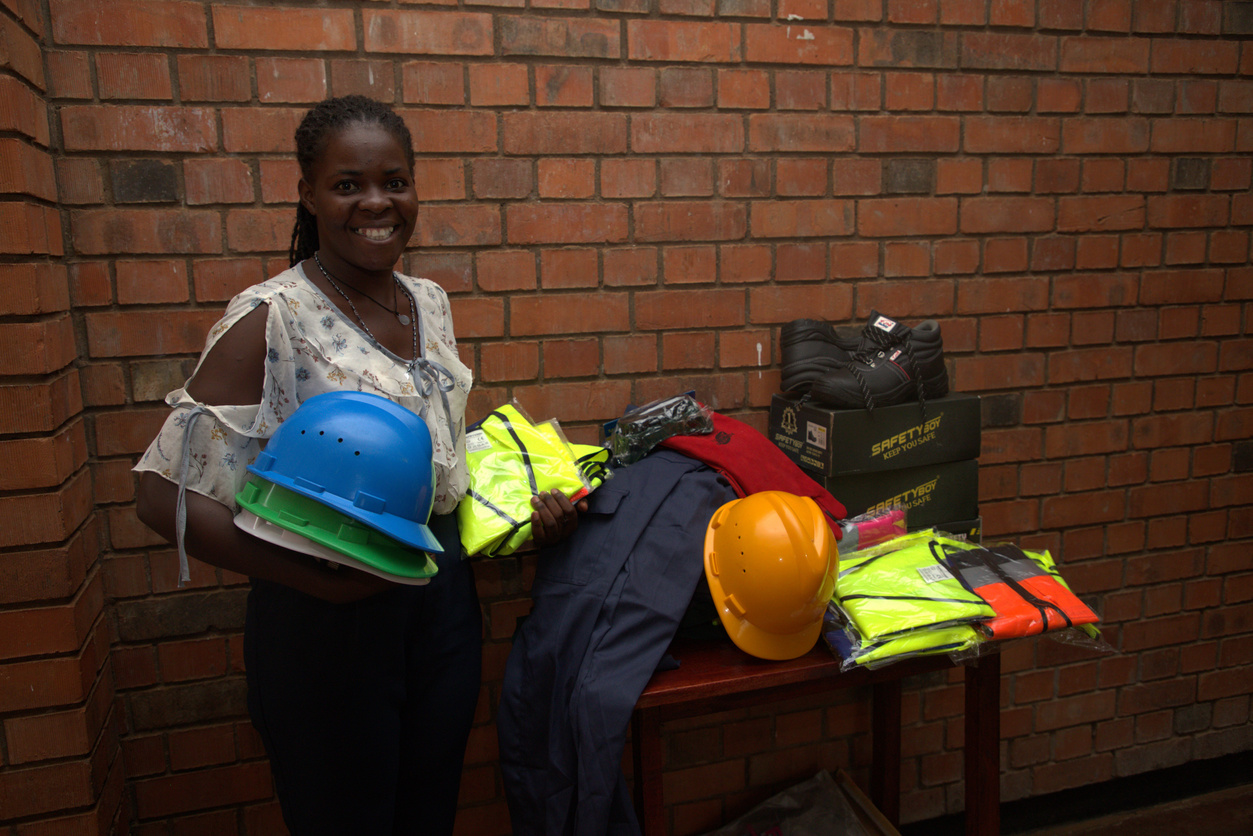
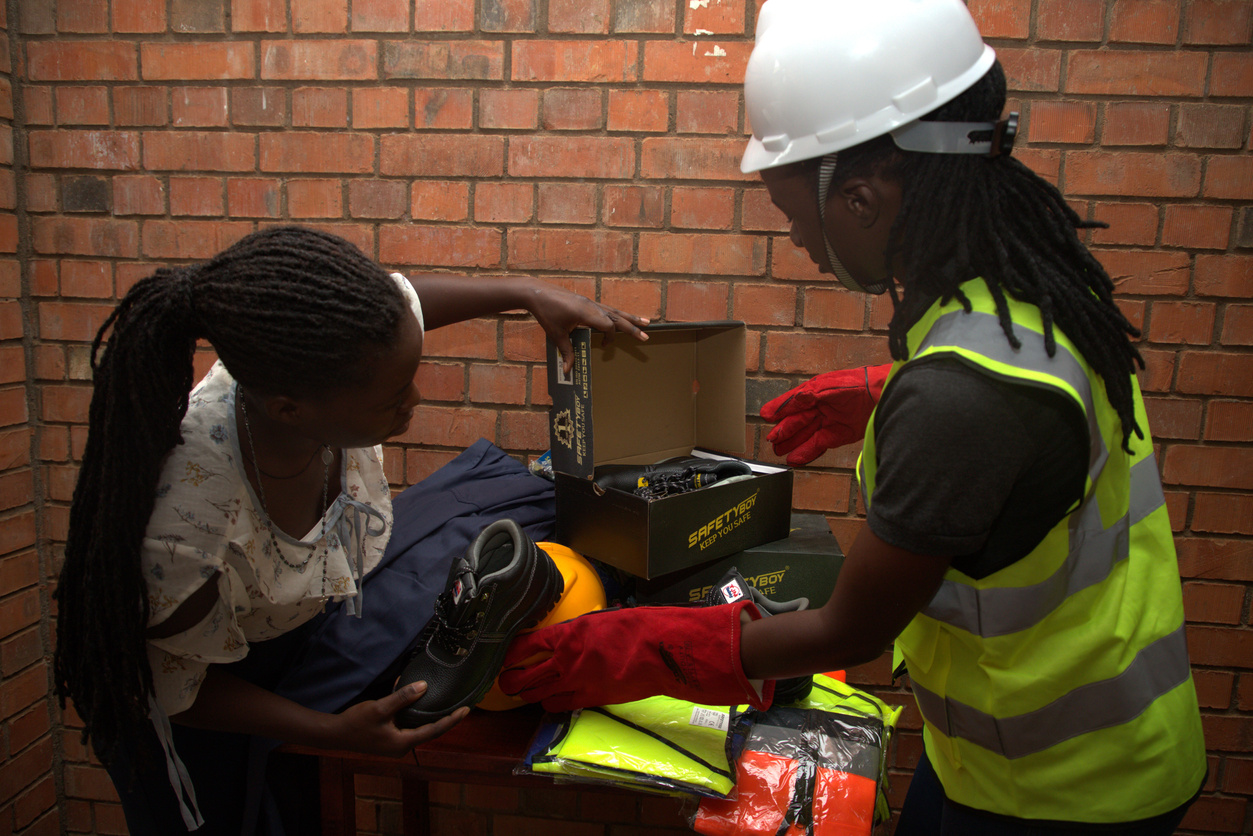
The online course in entrepreneurship and business skills proved transformative. It equipped Gorret with the tools and confidence to overcome her marketing anxieties and launch a small business selling safety wares, including helmets and gloves, with an initial capital of Shs 278,000.

Her journey also included a pivotal encounter with Tamim, a student at Lokopio Hills Technical Institute who runs a phone shop. “I engaged with him on how he manages his own business, and I learnt a lot that I applied in my own.” This exchange provided practical insights that complemented her knowledge and boosted her confidence in running a business as a student.
“The course equipped me
with the tools and
confidence to launch my
own business.”
Gorret’s business quickly addressed a critical need among her fellow engineering students. “As students at the faculty of Engineering, we are required to have personal protective equipment for practical lessons and internships,” explains Adrona Juliet Kagoola. “In year one, I bought protective equipment from outside campus, and it was extremely hard and costly as all the major neighbourhood towns (Tororo, Busia, Iganga, and Jinja) did not have most of the required equipment, and what they had was of poor quality and often did not provide a variety to choose from. I had to purchase the equipment from Kampala, leading to high sourcing costs. Gorret’s business has solved a major problem for us as students, bringing these essential items close to us students but also providing a variety of brands that we can choose from based on what we like and price.
Nasirumbi Leticia Prisila, a final-year student, echoes this sentiment: “I bought a helmet and gloves from Gorret. As a final student of electrical engineering who is currently engaged in projects, I need these. The gloves I purchased in Year one their insulation was so low insulation, and this was due to the limited availability of the PPE. However, Gorret has been able to solve this problem by providing high-quality PPE at affordable prices that one can use even after school.”
Muwanguzi Mildred Lynda further highlights the convenience Gorret’s business offers. “In year one, my father sent one of his friends to Kampala to purchase Personal Protective gear for me. Gorret’s business has brought these products closer to the student community, making them readily available any time and any day, eliminating all the transport costs associated with sourcing.”
Gorret’s initial marketing strategy involved leveraging her WhatsApp status, student groups, and friends. However, she now aims to expand her reach. “With the marketing knowledge I have acquired from the course, I want to expand this and design flyers that I can distribute to students and pin around the campus for more visibility.”
Skills Learned: Marketing, Pricing,
Customer service.
The eLearning Initiative also prompted Gorret to reassess her social media consumption. “The course also challenged me on how to consume social media. Initially, I would be on TikTok to just enjoy other things like fashion,” she admits. “However, since my engagements with the eLearning Initiative, I have changed the content I consume, looking at social media as a tool for learning and growth. So now I follow content creators running businesses and I am learning more about social media marketing and growing a business from them.”
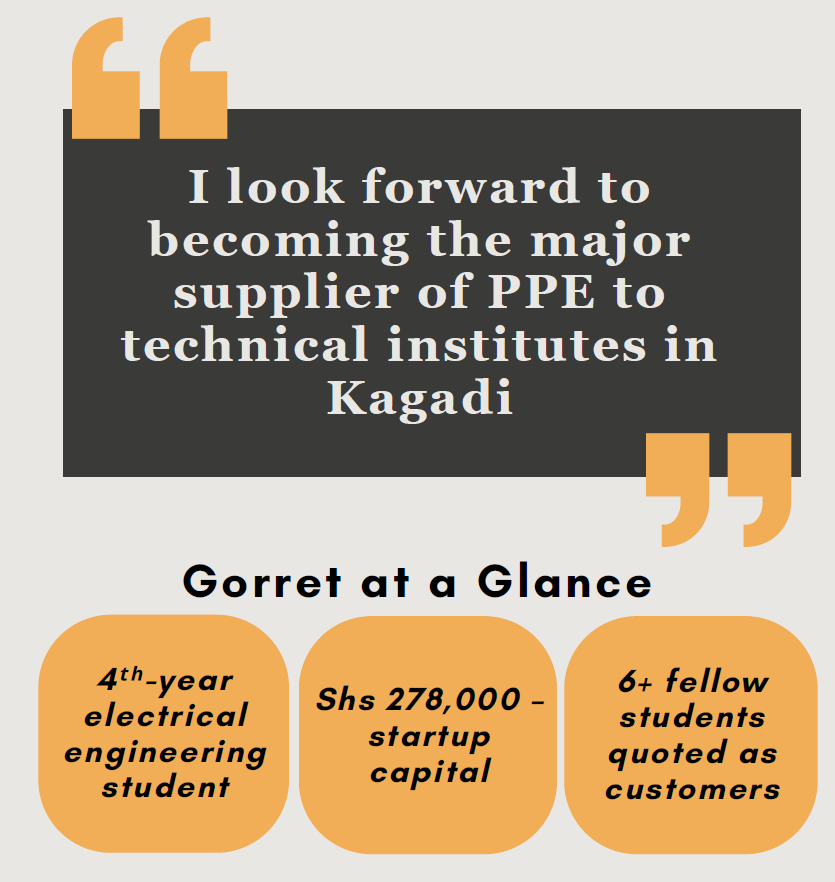
Looking ahead, Gorret envisions significant growth for her business. “As I complete my course, I look forward to expanding my business and opening even a bigger shop in my home district of Kagadi. I look forward to becoming the major supplier of personal protective gear to the technical institutes in the district.” Gorret’s journey stands as a powerful testament to the Uganda eLearning Initiative’s transformative impact, particularly the importance of its entrepreneurship and business skills course. By providing students with the right tools and fostering a resourceful mindset, the Initiative empowers youth like Gorreti to identify and address critical needs within their communities. Her story underscores the Initiative’s success in cultivating an entrepreneurial spirit and enabling students to translate theoretical knowledge into practical, impactful solutions, demonstrating the profound value of its interventions for the future of Uganda’s youth.

The Chairperson University Council, Dr Namara Warre, and Prof Nixon, DVC, commissioned the hub
The Pre-COVID Landscape: Facing Digital Hurdles
Imagine it is 10 p.m. in a dim lecture office, Dr Maureen Kabarungi, Acting Head of Department of the IT Faculty of Computing and Informatics, drags the last PowerPoint file onto a flash disk and sighs. Before the global health crisis, this was MUST’s approach to eLearning, rudimentary, marked by significant limitations. Dr Maureen Kabarungi vividly recalls these early struggles when the primary mode of digital content delivery involved lecturers uploading basic PowerPoint slides that students struggled to access, a stark contrast to the interactive and dynamic online experiences that define effective modern pedagogy. This “flash disk” approach, as the old Claroline LMS was often perceived, offered limited integration capabilities.
A Digital Leap Forward
From grappling with limited digital tools to commanding one of the university’s most visited online domains, Mbarara University of Science and Technology (MUST) has undergone a profound eLearning transformation. This ongoing revolution, spurred by the urgent demands of the COVID-19 pandemic, reflects MUST’s unwavering commitment to enhancing teaching and learning, ensuring accessibility and relevance in a rapidly evolving educational landscape.
From Flash Disks to Fully Online
“Our previous Learning Management System only allowed us to upload slides… students would struggle to access this content.”
— Dr Maureen Kabarungi
Before 2020, MUST’s eLearning offer was little more than a slide repository. Classes were split into two as a class of 400 could not physically fit in the lecture halls, and every Zoom link had to be requested from the IT desk. Dr Rennie Bakashaba recalls.
Then COVID‑19 struck, campuses closed, and a National Council for Higher Education audit flagged “critical” gaps in MUST’s readiness for remote teaching.

The forced transition to online learning rapidly brought the limitations of MUST’s existing infrastructure and pedagogical approaches into sharp focus.
“The university faced numerous challenges during this unprecedented period.” — Prof Nixon Kamukama, Deputy
Vice‑Chancellor
Within weeks of the COVID-19 pandemic, lecturers had to transition everything online—with tools not designed for the task. The crisis became the spark for wholesale change. As Professor Nixon Kamukama, Deputy Vice Chancellor, Academic Affairs, remarked, “The university faced numerous challenges during this unprecedented period.” The forced transition to online learning rapidly brought the limitations of MUST’s existing infrastructure and pedagogical approaches into sharp focus.
A Lifeline Arrives (Intervention)—the Uganda eLearning Initiative: A Partnership for Progress.
Recognising the urgent need for comprehensive intervention, the Uganda eLearning Initiative, a strategic program implemented by Cyber School Technology Solutions in partnership with the Mastercard Foundation, emerged as a crucial enabler. This initiative became instrumental in empowering MUST to fundamentally transform its eLearning capabilities.

Mr Michael Candiga(Left), a staff member on the eLearning Initiative, supports a Lecturer(Right) using a mobile device.
The Initiative’s support spanned several critical areas:
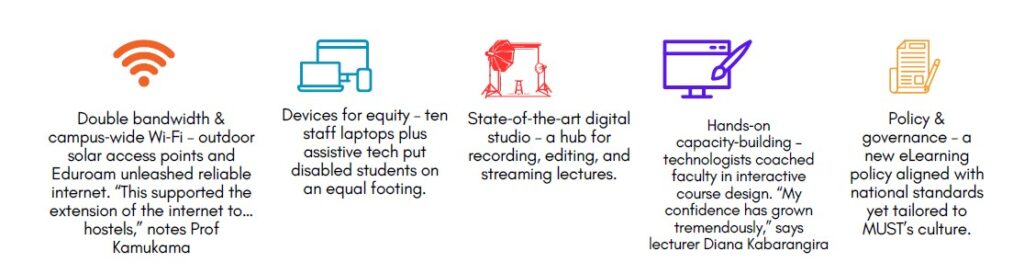
Technical Empowerment: The initiative deployed dedicated on-ground technical staff who worked hand-in-hand with MUST’s faculty and IT department. This hands-on support included setting up and configuring the new, more advanced LMS, assisting in the development and delivery of online courses, and providing continuous training and troubleshooting. Tezira Wanyana enthusiastically notes the palpable improvement: “The current LMS, acquired through our partnership with Cyber School Technology Solutions, is incredibly robust. It has truly empowered us lecturers to make our content interactive and allows me to run online classes successfully.”
Strategic Policy Development: The initiative provided expert guidance and resources for MUST to formulate a comprehensive eLearning policy. This collaborative process involved extensive sensitisation of key stakeholders, ensuring the policy was not only aligned with national eLearning standards but also tailored to MUST’s unique institutional needs. Enhanced Internet Connectivity: Addressing a critical bottleneck, the initiative facilitated a doubling of the university’s internet bandwidth. Furthermore, MUST’s enrollment in Eduroam through RENU significantly extended internet access, as well as the installation of outdoor solar-powered internet access points. Professor Kamukama emphasised the profound impact: “…this supported the extension of the internet to different places of the university, including hostels, greatly improving access to eLearning, as the internet is a critical component.”
“Double bandwidth & campus‑wide Wi‑Fi – outdoor solar access points and Eduroam unleashed reliable internet. “This supported the extension of the internet to… hostels,” notes Prof Kamukama.
State-of-the-Art Infrastructure:
To bolster in-house content creation, the initiative supported the establishment of a cutting-edge digital content hub and studio. This facility, equipped with professional-grade resources, now enables the faculty to produce high-quality, engaging online learning materials. According to Professor Kamukama, this state-of-the-art infrastructure has not only supported content digitisation but also given the university an edge over other institutions and cemented its place as a science and technology university. The hub’s impact extends beyond faculty, fostering new skills among students as well. As one student shared, “When I first started, I had little knowledge about professional video editing. However, through the training by the team in the Hub and constant interaction with the equipment and software installed there, I’ve learned to operate advanced cameras, edit videos with Adobe and CapCut, and design high-end graphics. This has given me the confidence and skills to start creating my own content for YouTube. I am now applying everything I learned to produce engaging videos, and I am excited because I am close to monetising my channel.”(Newton Mwesigwa)

A cutting-edge digital content hub and studio
installed at Mbarara University.
Inclusive Device Provision: Promoting equity in access, the initiative strategically provided essential
devices. Professor Kamukama detailed this vital contribution: “The Uganda eLearning Initiative provided
10 computers for our lecturers across different programs to support their content digitisation. Crucially,
they also provided assistive devices and technologies for our students with disabilities. Some of them
have long graduated, and I believe these devices have gone a long way to enable the future of students
with disabilities, allowing them equal access and participation.”
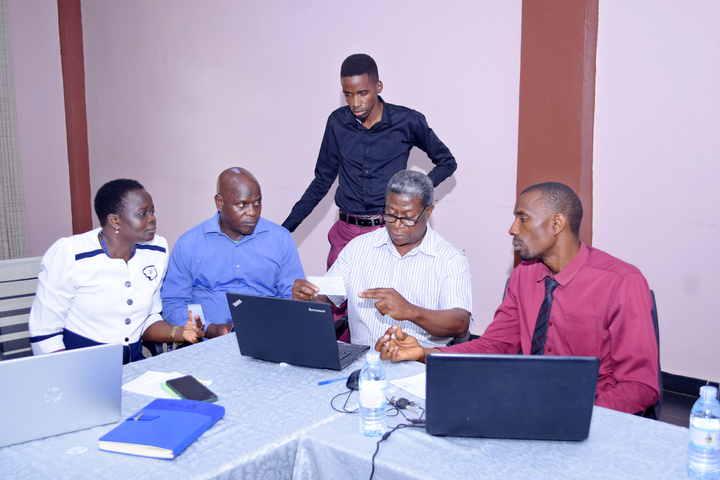
MUST Lecturers right in the group discussion with Nkumba
Colleagues during a Content digitisation workshop, with an
Inclusion specialist (2 Left) guiding inclusive
design
Empowering Capacity Building: To ensure sustained and effective eLearning adoption, the initiative conducted extensive capacity-building training for staff. Diana Kabarangira, a lecturer in the Faculty of Business and Applied Sciences, shared her personal journey: “Content digitisation was challenging at the start. In the beginning, my notes were flat, nothing interactive, and I was not confident. However, over time, with the training, I have learned how to make proper content. I now prepare my notes and include pictures and videos to make them attractive and engaging; my confidence has grown tremendously.”
“Content digitisation was challenging at the start. In the beginning, my notes were flat, nothing interactive, and I was not confident. However, over time, with the training, I have learned how to make proper content. I now prepare my notes and include pictures and videos to make them attractive and engaging; my confidence has grown tremendously.”
The Transformative Impact: A New Era of Learning
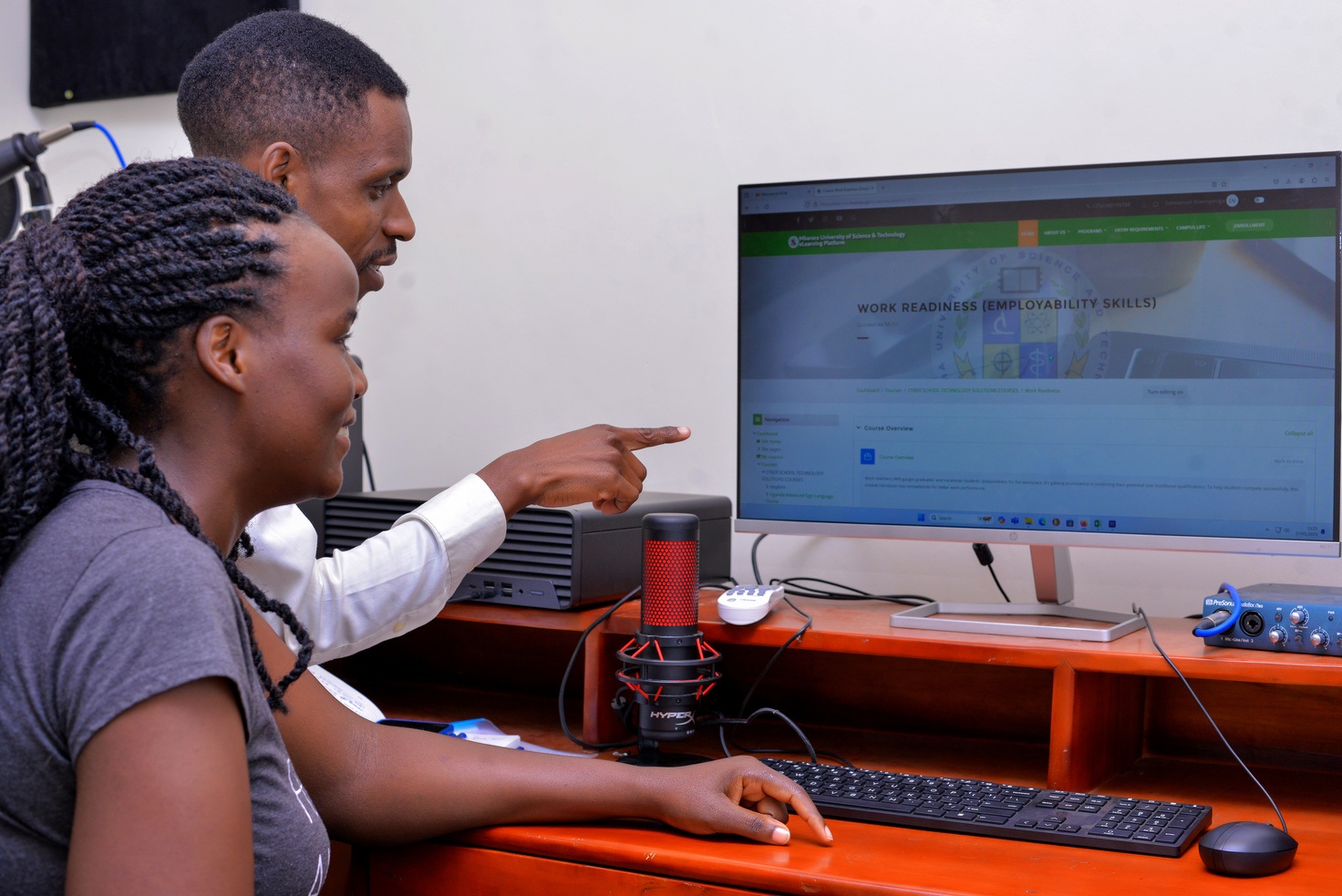
MUST Lecturer presenting at Content digitisation workshop
Elevated Teaching and Learning: The new LMS has fundamentally empowered lecturers. Tezira Wanyana, for instance, now seamlessly incorporates guest lecturers into her online classes, providing students with diverse perspectives and breaking the monotony of a single instructor. “Online teaching has given me great flexibility,” Wayana elaborates. “I taught Database programming hybrid for this second semester, and importantly, online teaching has enabled me to show up for all my tasks, as a PhD student, researcher, and Lecturer.” This flexibility is complemented by the LMS’s capacity to manage large cohorts, a challenge Dr Rennie Bakashaba no longer faces: “All students can join in, and I teach at once.”
Unprecedented Accessibility and Flexibility: The enhanced LMS has democratized access to education, making developed content readily available to students anywhere, at any time. This flexibility is particularly invaluable for lecturers and students balancing diverse needs, schedules, and geographical locations.
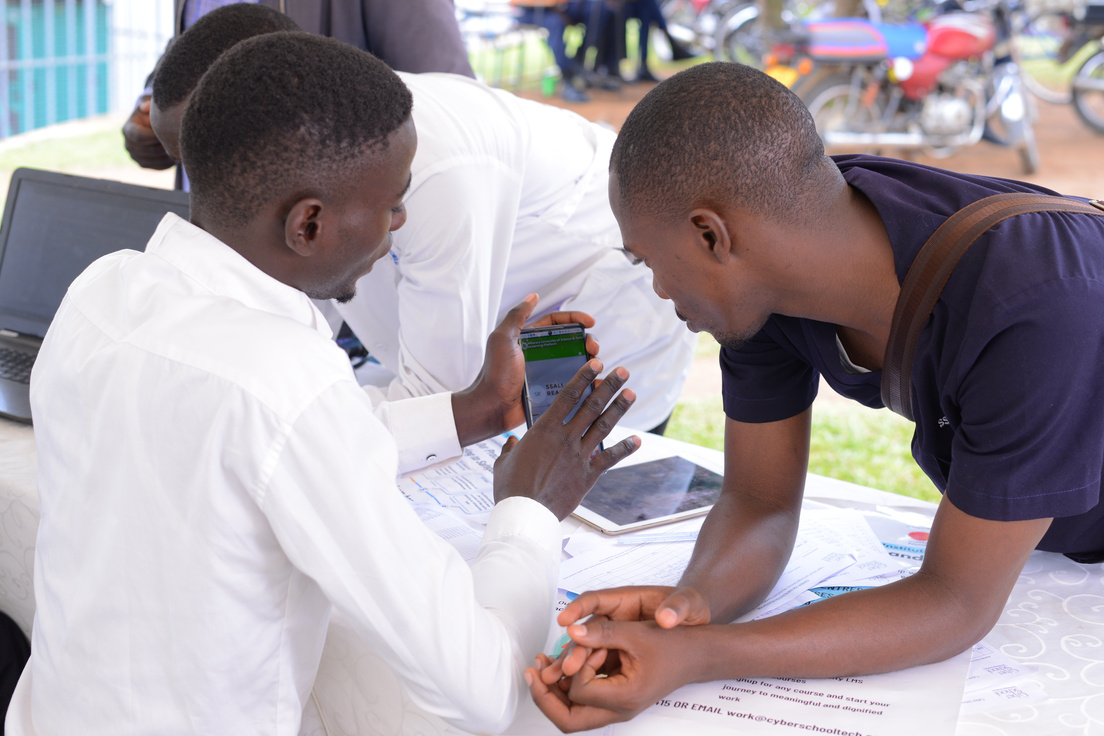
Student supporting fellow student to enrol on the MUST LMS using a mobile device during a physical campaign organised by the e-learning Initiative.
A student studying Artificial Intelligence recounted their experience: “The system served as a central platform for accessing course materials, participating in virtual lectures, submitting assignments, and engaging in discussions with both students and the instructor.“
I appreciated how the ELMS facilitated a structured yet flexible learning environment, and it significantly contributed to my understanding and appreciation of Artificial Intelligence.”
They further noted, “One of the most impactful tools integrated into the LMS was BigBlueButton, a web conferencing solution used for online classes. The integration of BigBlueButton made remote learning feel interactive and productive.”
Dynamic Content Digitisation: Faculty members are now proficient in developing highly engaging online content. Diana Kabarangira’s progress is a testament to this: “As a lecturer, I have been trained in content development, and I have put the skills acquired into practice. So far, I have designed three courses and am currently working on the fourth. Before this, our students used to struggle to access lecture slides, which were not even interactive, but now, student engagement has tremendously increased with the interactive online content. Students can use and interact through discussion forums on the LMS, and it has enabled us to promote student-centred learning.”
Forward-Thinking Policy and Inclusivity: MUST has successfully developed an eLearning policy that is not only responsive to its specific needs but also champions course inclusivity, with dedicated considerations for students with disabilities in course design and delivery.
Remarkable Institutional Growth: Over the past three years, MUST has experienced exceptional growth in its eLearning capabilities. This ascendancy is concretely demonstrated by the fact that, as of September 2024, the university’s LMS stands as one of its most frequently visited online domains.
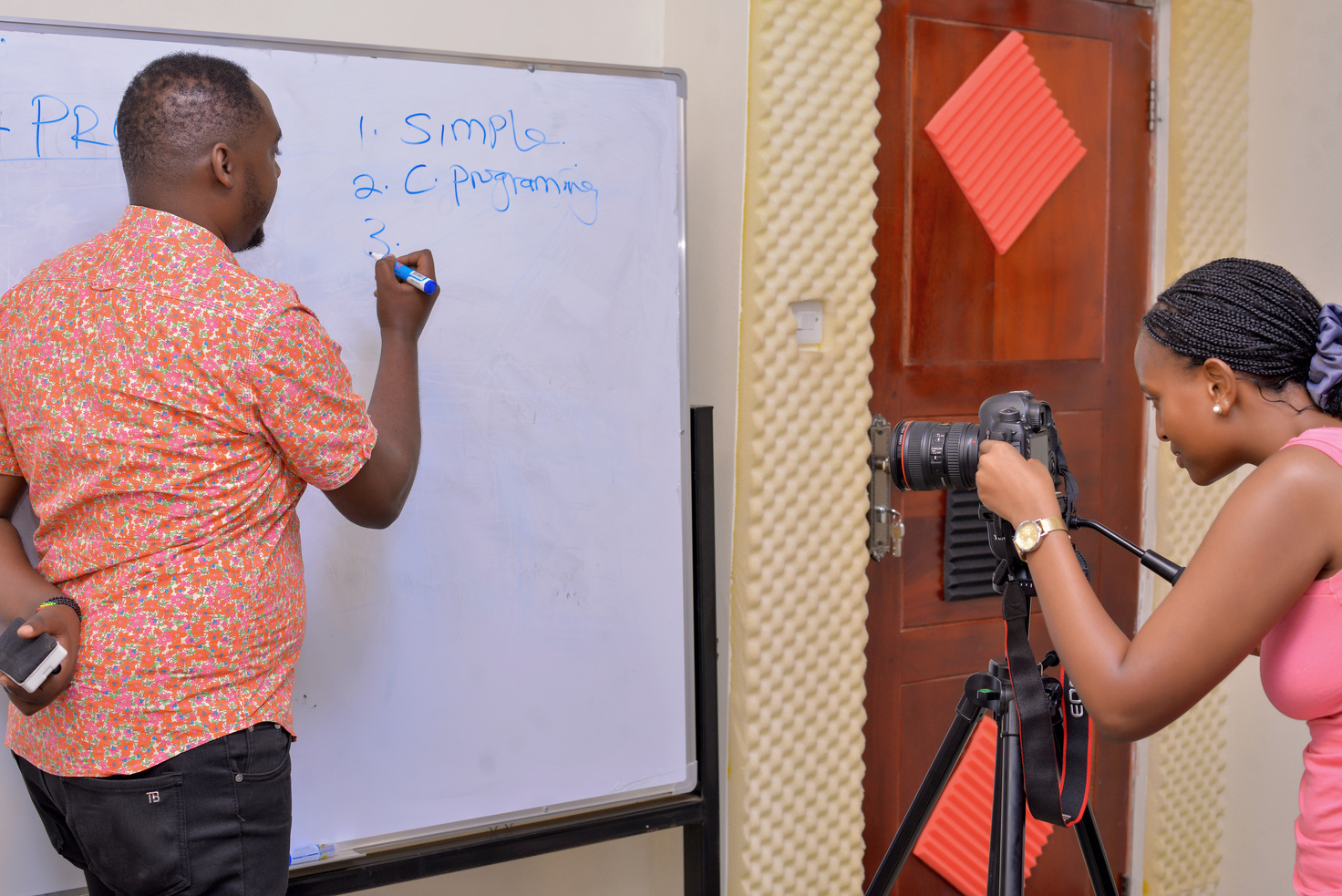
MUST Lecturer recording a live class session supported by a student
Innovative Space Management: eLearning has proven to be a crucial solution in addressing the university’s perennial challenge of limited physical space. Large classes can now be taught entirely online, ensuring all students can attend and actively participate, optimising existing resources.
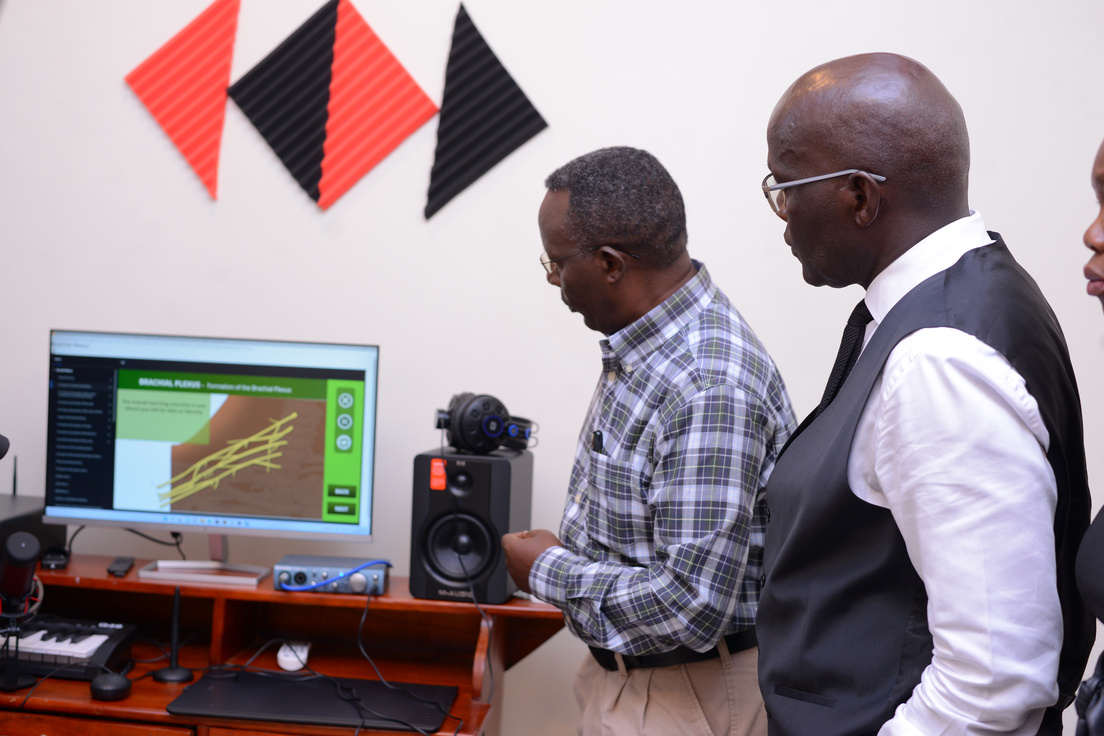
University Chairperson Dr Namara Warren and DVC Prof Nixon viewing digitised content
Innovative Space Management: eLearning has proven to be a crucial solution in addressing the university’s perennial challenge of limited physical space. Large classes can now be taught entirely online, ensuring all students can attend and actively participate, optimising existing resources.
Charting a Digital Future
Mbarara University of Science and Technology’s journey to embrace eLearning has been truly transformative. Through the strategic and comprehensive support of the Uganda eLearning Initiative, the university has not only surmounted significant challenges but has also markedly enhanced its capacity to deliver high-quality online education. The positive ripple effect is evident in the enriched teaching and learning experiences for both faculty and students. While MUST continues its evolution, eLearning has undeniably become a vital and integral pillar of the institution, poised to play an even greater role in shaping its educational future and extending its reach.