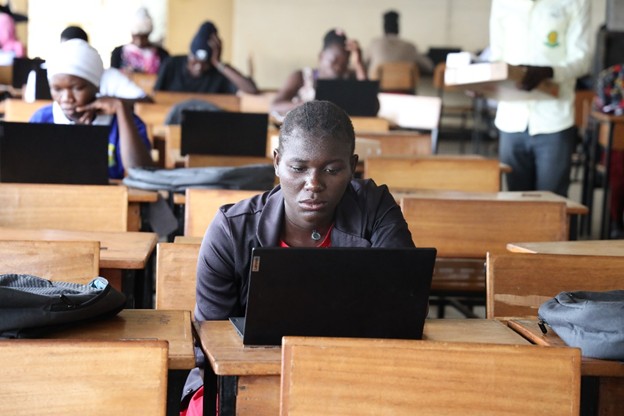
The Gender and Vulnerable Groups function ensures the Uganda eLearning Initiative is deliberately safe, inclusive, and gender-responsive, closing the digital divide and addressing gender disparities in access, retention, completion, and transition to dignified work for Young Women and Girls (YWAGs), Students with Disabilities (SWDs), and Refugee Youth, especially from high-poverty and remote areas.
How we deliver (strategic levers):
- Institutionalisation for Sustainable Change. We build capacity for instructors, counsellors, and student leaders in Gender Equity, Disability Inclusion, and Safeguarding; and co-develop, adopt, and enforce Gender, Disability-Inclusion, and Safeguarding policies and SOPs that are responsive to vulnerable learners’ needs.
- Equitable Access to Education. We provide targeted Compressive scholarships (YWAGs, SWDs, refugees); Career guidance to students in secondary schools on financial support opportunities available for their transition to High Education, and conduct PWD assessments to inform reasonable accommodation, assistive-device provision, and learner training for seamless use.
- Safeguarding & Psychosocial Support. We operationalise survivor-centred safeguarding with anonymous reporting, functionalize referral pathways and train counsellors and students to provide first-level psychosocial support, establish a Peer-to-Peer Mentorship program to support student retention and completion.
Key achievements to note in Phase 1
- Systems and Policy – Policy reviews for gender, safeguarding and Disability inclusion have been conducted across EIs, and Gap Action Plans instituted to align and enforce inclusive frameworks
- Access & inclusion- 172 scholarships awarded benefitting YWAGs, SWDs and Refugee students to access higher education, 374 Equipped with assistive devices and trained for effective use, 34 instructors trained in inclusive digital pedagogy, enhancing teaching quality
- Safeguarding & Psychosocial Support- 5 EIs have functional referral pathways, 65 student leaders and 32 EI counsellors trained to deliver robust first-level psychosocial support structures, 45 students trained in peer-to-peer mentorship as a result, 206 students have received academic, emotional and social support important for retention and completion of Higher education.
- Institutional Commitment: FY2025/26 budget uplifts at MUST and Busitema University for gender, disability inclusion, and PSS, signalling strong leadership buy-in.
Scaling for Greater Impact
As we expand to 14 EIs (10 Technical and Vocational Education and Training Institutions and 4 phase 1 EIs), our commitment remains steadfast
- Continue inclusive retention scholarships in Phase-1 EIs;
- Policy co-development, adoption and enforcement (Gender, Disability-Inclusion, and Safeguarding).
- Standardise safeguarding, peer mentorship, and first-line PSS across all 14 EIs;
- Assistive technology and Reasonable Accommodation (devices and training)
By leveraging cutting-edge eLearning solutions and fostering systemic change, the Uganda eLearning Initiative is empowering Young Women and Girls, Students with Disabilities, and refugees.